I became a travel journalist as a second career back in 2004. It was a lifestyle change from a corporate career in telecommunications to a more carefree existence that allowed me to travel the world (I’ve been to all seven continents and 66 countries). Little did I know how fast the journalist and travel landscapes would change. I can relate to this quote about travel writing by Paul Theroux “He regarded himself as an accomplished writer — a clear sign of madness in anyone.”
When I first started, it was difficult to break into travel writing but these days, anyone with the tenacity and the will to succeed can learn how to start a travel blog, however, it does take time and dedication. If you’re looking for tips on how to start a blog, there’s a bewildering array of ideas online and there’s a difference between travel journalist and travel blogging.
Travel Journalists
A Peek Into The Life of A Travel Journalist

To give you some insights on how travel journalists see the world, here are some perspectives from some successful travel writers.
Although the life of a travel journalist can often be lonely, as the joys of travelling with friends is something that many travel writers have to give up, there are many benefits of being a travel journalist.
All those interviewed below have worked as professional travel journalists for at least 10 years and some have been writing and travelling professionally for more than 20 years.
What’s the best thing about the life of a travel journalist?
Kerry Heaney: I like to explore new places and find great food.
Kate Armstrong: For me, the best thing about travel is the delight of new sensations when you step off a bus or an aeroplane.
Maria Visconti: I like places that are unknown where I don’t know the culture or the language and I’m totally out of my comfort zone.
Lee Mylne: It’s about learning about other people, other places…every place is different but we’re all the same.
Kara Murphy: Lately, I like travelling to explore new underwater landscapes. The last year I’ve been doing underwater photography.
Danielle Lancaster: Everything is good for a different reason.
What do you look for when you travel?
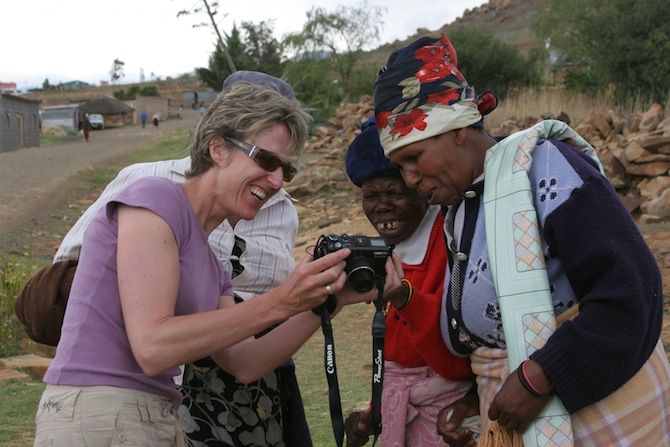
Kate Armstrong: It’s everything from aromas of spices to the sounds of church bells.
Lee Mylne: It’s not about ticking the boxes. It’s about learning things. It’s about meeting people, hearing their stories.
Sue Gough Henly: I think when you’re in a fresh new place you’re so alert and you’re so observant about the everyday things that it makes it special.
Kate Armstrong: For me, it’s about the cuisine, it’s about the connections and the friendships that I make along the way.
What’s your favourite destination?
Kate Armstrong: My favourite destination at the moment would be Portugal.
Sue Gough Henly: My favourite destination has to be France. I’m a complete Francophile.
Maria Visconti: A favourite area of mine is Asia as my heart is in Asia.
Kara Murphy: Lady Elliot Island on the Southern Great Barrier Reef because you can swim with turtles every time you get into the water.
Lee Mylne: New Zealand because it’s so diverse and beautiful.
Kerry Heaney: I spent a month in Europe and I have to say that was wonderful, really enjoyed that.
Christine Retschlag: I have to say Queensland. I’ve actually thought a little bit about this and I love it. I’m born and bred here. It’s beautiful. It’s got everything – the world’s oldest rainforest, the world’s largest Reef. It’s got the Outback. It’s got the best beaches. It’s got fantastic people, a fantastic climate, and fantastic food. What’s not to love?
What do you collect when you travel?
Kerry Heaney: Earrings because they are small. Tea towels because I’m a food writer and memories.
Danielle Lancaster: No, no I’m not a collector. I will occasionally buy something that’s a little bit unusual as a small piece of pottery. No, I’m not a collector. I’m just a collector of photography gear.
Christine Retschlag: I just think that one day I’ll be an old lady and I’ll be sitting there looking through all my stories and thinking about my memories. I’ll be thinking about all the characters that someone a little piece of them comes home with you and changes you.
How To Become A Travel Journalist
By Rob McFarland

Travel journalism is one of the most coveted careers on the planet.
Who wouldn’t want to be paid to travel the world visiting luxury escapes, drinking cocktails by the pool of a five-star resort and eating in Michelin-starred restaurants?
Of course, the reality is often very different.
For every five-star resort, there’s a dodgy motel and for every Michelin-starred restaurant, there’s a questionable roadside stall.
But if you love to travel and you love to write, it’s a dream job, so, here are some tips on how to get paid to travel the world.
How did I break into travel journalism?
Let me take you back to 1994…
I finished a degree in Computing and IT and embarked on a career as an IT consultant.
For a while, I enjoyed it.
It was social, it paid well and consultancies can make you feel good about working 80-hour weeks.
But after eight years I realised this wasn’t what I wanted to do – or how I wanted to dress – for the next 30 years.
I had no idea what I wanted to do instead so I took some time off, travelled and read a bunch of career self-help books I swore I’d never go near.
They turned out to be surprisingly helpful and they made me realise two things:
1) I loved travelling
2) I loved writing
While visiting my parents in the UK, I strolled into the lounge room and casually announced that after months of deliberation that I’d finally figured out what I wanted to be: a travel journalist.
Imagine their reaction.
They were – to put it mildly – concerned.
I had no experience.
I’d never studied journalism.
I didn’t even like English at school.
And I was giving up a secure, well-paid career with good prospects.
Undeterred, I returned to Australia and gave myself six months – if I didn’t get something published in that time, at least I’d tried and could always go back to IT.
So I started writing and to my surprise, I started getting published.
Little things at first, in backpacker magazines and airline in flights, then larger features in newspapers.
Soon publications started commissioning me and – to cut a long story short – now I’m a full-time travel journalist.
Why is this important?
Because I want to provide an insight into my background, which as you can see is not in the least bit literary or creative.
The life of a travel journalist
So what does my life look like now?
It’s difficult to describe it without sounding smug but the reality is that companies pay for me to travel and publications pay me to write about it.
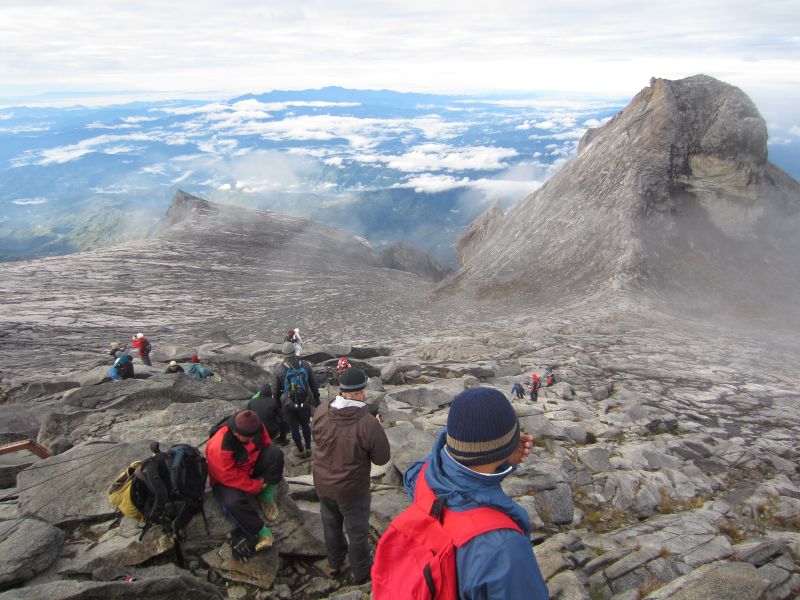
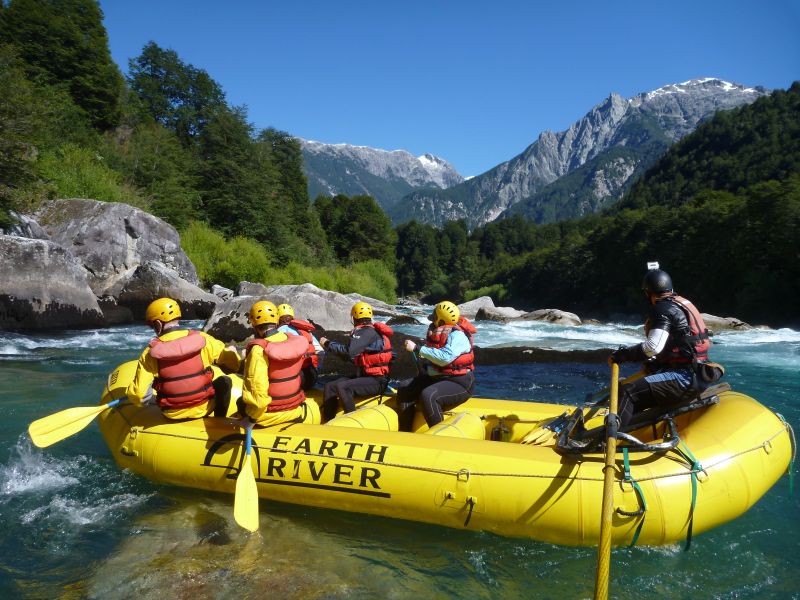
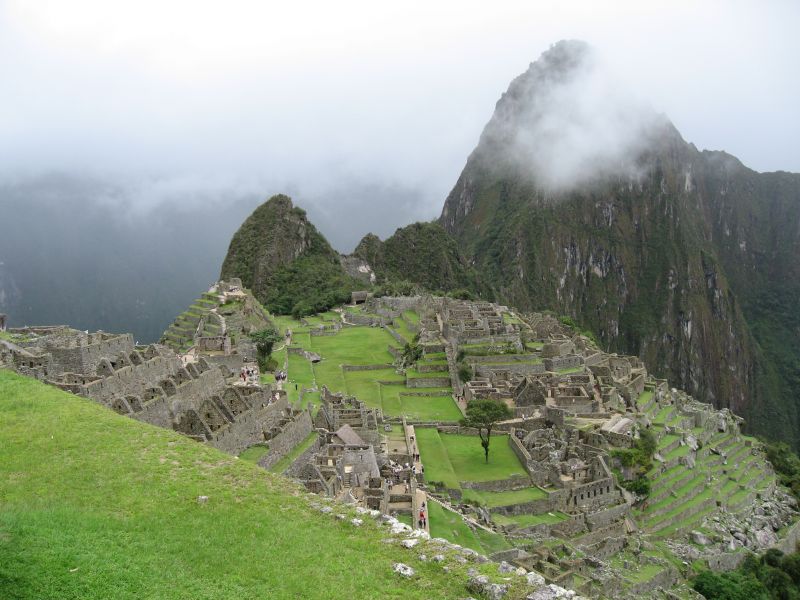
Highlights over the last few years include scaling Wayna Picchu in Peru, a six-day white-water rafting adventure in Patagonia, on the Futaleufu River, and climbing Mount Kinabalu, south-east Asia’s highest mountain, in Borneo.
One of the biggest benefits of being a travel writer is that I can work from anywhere, so each year I divide my time between Sydney, New York and Europe.
In summary, I feel like I’ve got my dream job…I get paid to travel.
And I genuinely believe that providing you have an aptitude for writing, anyone can do this.
Because of this:
“The great thing about travel writing, particularly at the newspaper level, is that it’s pretty much a meritocracy. If your stuff is good, you’ll get published and recognised. As an editor, I don’t care where (or whether) you went to college, what your resume looks like or whether you’ve previously had a dozen cover stories in National Geographic. All I care about is the manuscript you’ve sent me. If it’s good, I’ll publish it. If it’s not, I won’t.” -John Flinn, former travel editor of the San Francisco Chronicle (Lonely Planet’s Guide to Travel Writing.)
How encouraging is that?
John doesn’t care what you studied or whether you’ve even been published before – he’ll judge you on the story you submit. I can’t think of many careers where that’s the case.
You can’t become a doctor or lawyer next week, but you can become a travel writer.
But how do you break in?
Surely you need to have worked on a publication?
And don’t you need to be a good photographer?
Let’s tackle some travel writing myths – five common misconceptions that exist about the travel writing industry.
Travel Journalism Myths
1- You must have a journalism degree
Many of Australia’s most respected and awarded travel writers didn’t study journalism.
They’re just good writers.
In my opinion, you either have an aptitude for writing or you don’t.
Sure, if you want to work on a publication, you’ll need a relevant qualification, but as a travel freelancer, it’s pretty much a level playing field.
An editor will judge you on the story you submit.
2- You need to be a good photographer to be a travel journalist
Not true.
I didn’t take photos when I started and it didn’t hold me back.
If you look at the newspaper travel sections you’ll see a lot of the pictures come from image libraries such as Getty and Lonely Planet.
They have thousands of incredible pictures taken by professional photographers all over the world.
It’s unlikely you’ll have been somewhere they haven’t.
3- You can’t make a living as a travel journalist
I know lots of full-time writers who manage to pay their rent and feed and clothe themselves.
It’s certainly not easy – you need to write a lot – but it’s not impossible.
One warning: the pay is terrible.
I’m a lot poorer now than when I was working in IT, but I’m a hell of a lot happier.
Do not for one second go into this for the money.
4- A ‘No’ from an editor means it’s not good enough
You submit a story to a publication and the editor replies “No thanks”.
At this point, it’s all too easy to think:
“It wasn’t good enough. Why am I doing this? I can’t write. I’m going back to being an IT consultant/accountant/ landscape gardener….”
But just think for a second why they might have said no.
It might be because it’s not good enough, but it also might be because they published a similar piece two months ago, or have a similar piece waiting to run.
Editors rarely tell you the reason they’re declining something so it’s all too easy to jump to the “I’m not good enough” conclusion.
I’ve sold dozens of stories that were rejected by one outlet only to be published elsewhere without a single change.
5- You need to read lots of “How to be a travel writer” books
Resist the temptation to put off writing until you’ve read every “How to be a travel writer” book in the local bookshop.
Now, this may seem like an odd thing for someone who runs workshops for aspiring travel writers to say.
The reality is that the people who go on to be successful after taking my course already have an aptitude for writing.
What they get from the course is detailed feedback on their writing (something I would have given my left arm for when I was starting out), ten years’ worth of hard-learnt tips and tricks, and the confidence to actually do it.
“The only training for writing is writing – and reading and reading and writing some more.”
Pico Iyer, British novelist.
Travel Writing Tips
Here are five tips to help you get published:
1- Don’t pitch ideas, just write the story and send it in
Until you’re established, an editor is never going to commission you to write a story if they haven’t used you before.
Why would they?
You’re an unknown quantity.
So, rather than emailing, “I’m thinking about writing a story on X”, just write it and send it in.
If they like it, they’ll use it. If they don’t, they won’t.
Once you’ve done this a couple of times, and the editor starts to trust you, then you can start pitching ideas.
2- No attachments
Don’t send your story as an attachment.
Instead, include it in the body of the email.
To open an attachment, the editor has to double-click on it, wait while it’s virus-scanned and then download it to their computer – all time they could be spent doing something else.
Make it as easy as possible for an editor to read your story.
If the story is right there in the body of the email, literally staring them in the face, it’s almost impossible for them not to read the first line.
3- Start small and work up
Tempting as it might be, don’t send your first story to the New York Times – it is highly unlikely they will publish it.
Choose an outlet that suits your style and runs similar types of stories.
The newspaper travel sections are a good starting point because they need a lot of content each week and will publish a wide variety of styles.
Most of the people who have been published after taking my course had their first story in a newspaper.
4- Get to know the publication
Get familiar with the outlet you’re pitching to.
Buy a copy of the magazine or newspaper and figure out the types of stories they publish, the style of writing they prefer (serious/humorous/first-person/third person?) and whether they’ve already run something on that subject.
No matter how well-written your story is, an outlet is never going to publish it if it ran a similar one last week. Or if it’s on a subject it doesn’t cover (the magazine Australian Traveller – which surprise, surprise is about travel within Australia – gets sent international stories all the time).
5- Persevere
Providing you can write, there is one quality which will determine whether you make it as a freelance travel journalist: perseverance.
I know so many good writers that aren’t published simply because they haven’t persevered.
And I know a lot of editors who’ve told me they eventually published someone because week after week they kept popping up in their inbox.
You will get rejected.
Probably a lot when you’re starting out. And how you react to it is crucial.
If you let it get to you and give up, you’ll never be published.
If you shrug it off and carry on, you’re still in the game.
If you really want this life; if you want to be paid to travel the world perseverance is what’s going to get you there.
“A professional writer is an amateur who didn’t quit.”
Richard Bach, American author
Safe travels and Good luck!
Rob McFarland runs workshops for aspiring travel writers and many of his students have gone on to be published.
How To Write a Great Travel Story
Tom Neal Tacker
Writing about travel for the last 15 years has taught me three important lessons:
- To experience life fully, try walking in someone else’s shoes for at least a day.
- Travel is the great mind opener, your imagination will expand.
- Never judge a book by its cover; unknown worlds lie within those pages.
Travel writing has also taught me that clichés are rife.
It’s a useful tool when describing well-known destinations but clichéd nonetheless, hence the three important lessons listed above.
Trying to differentiate from what is the travel story norm:
Step One: bring the reader along for the ride with a first paragraph that captures their attention.
Step Two: cite the location and/or place to satisfy the accommodating host.
Step Tree: describe various experiences, preferably in gung-ho fashion to verify ‘travel writer’ credibility and step four, bring the message home with a ringing endorsement to keep the host and advertiser happy, I can honestly say that most travel writing is crushingly dull and formulaic.
I know as over the years I’ve contributed to the contemporary paradigm.
Why travel writing is contrarily ordinary considering the world’s wonders and extraordinary people means to me the writing shouldn’t be dull.
The voice of experience in mainstream media is whispering in my ear as I write this.
In an attempt to rectify the conundrum I launched my own online magazine so I can write about travel from a nakedly honest perspective.
But I always had a hankering to do more.
How could I offer readers something other than descriptive prose?
How could I deliver the goods I describe in my stories?
How could I take readers along for the journey… for real?
Tom Neal Tacker is a freelance travel journalist and owner of Naked Hungry Traveller.